


Avoiding snags on rocky bottom: how to stop your rig hanging up and what to do when it does
Anyone who fishes from rocks or reef knows the moment: you cast, start a slow retrieve, and everything stops. No fish, no movement, just a tight line and a rough bottom that has swallowed the sinker. This is the "snag" (called tawa'ir in Gulf slang), and it is the number-one reason anglers lose sinkers, hooks and whole rigs when fishing from rock. The cost is not only money: repeated snags ruin a trip, and they tempt anglers to yank the line or wade into slippery water, which is genuinely dangerous. This article explains why snags happen, how to reduce them before they happen, and what to do when one does.
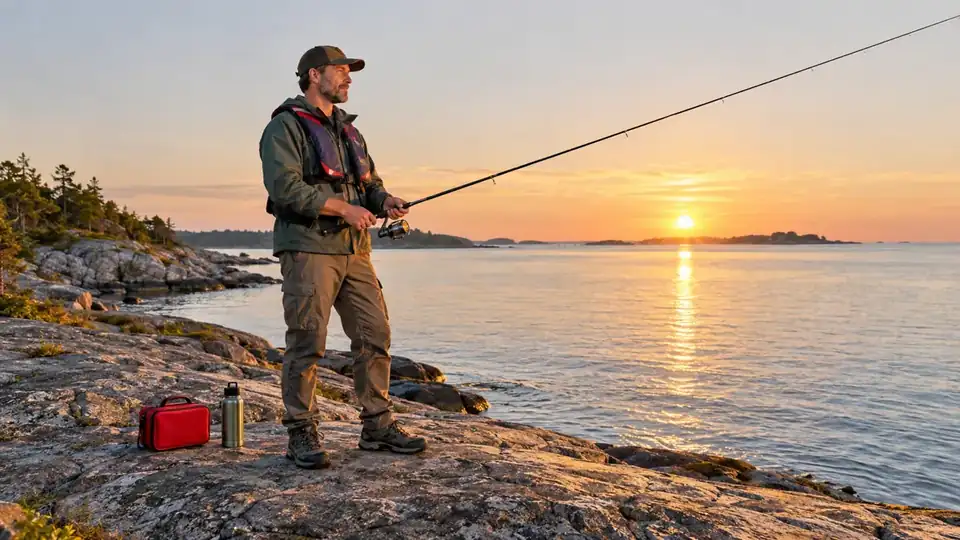
Why do snags happen?
The sinker and hook settle on the bottom, and a rock or coral bottom is full of cracks and edges. When you retrieve, the sinker slides into a crack and the line or hook catches behind it. Three causes repeat again and again:
- The wrong sinker shape: pyramid or angular sinkers wedge into cracks far more than round or pear-shaped ones.
- A rig that sits on the bottom for no reason: the closer the hook and bait are to the rock, the greater the chance of a snag.
- The retrieve: a slow, bottom-hugging retrieve gives the rock time to grab you, while gradually raising the rod lifts the rig over obstacles.
Two more factors: strong current pushes the rig into crevices, and swell drags the line and wraps it around nearby rocks.
Before you cast: read the place
The best time to learn a bottom is at very low tide, when the rocks are exposed. From a safe position on the shore, look at the overall shape: where the rocks begin and end, and where the smooth sand is. Fish love the edges of rocks, but you do not need to cast directly on top of them; often it is better to cast to the neighbouring sand and let the bait drift toward the edge with the current.
Ask the regulars too. A piece of local knowledge such as "past fifty metres it gets rough" can save you dozens of sinkers. If the place is new, start with a short cast and feel the bottom before casting far.
Rig choices that reduce snags
| Fix | How it helps | Note |
|---|---|---|
| Pear or round sinker | Slides over cracks instead of wedging in | Holds less well in strong current |
| Weak-link rig (lighter line to the sinker) | If the sinker snags, the weak link breaks and you save the rest | Make it a little weaker than the main line, not much |
| Sliding sinker rig | Lifts the rig off the bottom and cuts hook snags | Needs a slightly longer leader |
| Float or floating rig | Bait drifts above the rocks instead of sitting on them | Suits fish that feed mid-water |
| A sturdier hook in the right size | Does not open easily under load | Do not overdo it: heavy hooks reduce bites |
A practical rule: do not risk your good rig in rough ground. Carry a handful of cheap ready-made rigs for rocky spots and keep the better ones for clean bottom. Remember that a leader slightly stronger than the main line protects against abrasion on rock, but it will not prevent snags.
During the retrieve: keep the rig moving
- Raise the rod tip right after the cast and start retrieving so the sinker does not sit for long.
- Retrieve in short lifts: raise the rod slightly, then reel in line as you lower it, so the rig stays above the bottom.
- When you feel the sinker "grab" for a moment, do not pull hard. Drop the line for a second or two; the swell will often free the rig, then carry on.
- Watch the angle of the line: if it runs across rocks near you, raise the rod high so it does not chafe.
Snagged: what now?
These steps run from safest to least safe:
- Give slack: wait a little; swell and current may free the rig on their own.
- Change the angle: walk carefully on stable ground to another part of the shore and pull from a different direction. A new angle often lifts the sinker out of its crack.
- Pull and release: tighten the line moderately, then release quickly, and repeat a few times. These small jerks work the sinker loose.
- Use a snag retriever: tackle shops sell rings or retrievers that slide down the line to the rig and free it with a light pull.
- Cut the line: if nothing works, cut with scissors or a line cutter and accept the loss. A cheap sinker costs far less than an injury.
Safety note: never wrap line around your hand or fingers to pull; it can cut skin badly if it lets go. Use a glove or a cloth and pliers. And never step onto wet rocks or into heavy surf to free a rig; it is not worth it. Always check the tide before getting close to rocks (see the tool).
Look after the sea
Cut line stays in the sea and harms birds, turtles and fish. Collect every piece you cut in a small bag and take it home, and if you can pick up old line or hooks you see at the spot, do. Many anglers keep a small rubbish bag in their tackle bag as a fixed habit.
Quick summary
- Choose round or pear sinkers for rock and avoid pointed ones.
- Keep the rig high and keep it moving.
- Build in a weak link that saves the rest.
- Give slack, then change the angle, before you pull.
- Cut the line when needed, and never risk yourself.
To choose the right rig for the spot, read the beginner rigs guide; to prepare your kit, see the first-time gear checklist; and for safety, fishing rules and safety.