


Your first shore-fishing trip in Kuwait: from packing to the first cast
Your first shore trip in Kuwait does not require the most expensive rod or a vocabulary of every fish species. Start with an allowed, manageable location, a simple setup and a way to understand what happens to your bait and line. A controlled cast and a reliable knot are worthwhile first-trip achievements even without a catch.
This guide follows a trip from packing to returning home. It does not claim personal field experience or guaranteed catches. You may hear shore fishing called seif fishing locally; here we focus on bait fishing from land at an accessible, permitted location.
1. Choose a place where you can learn
Look for permitted access, room behind you for casting, stable footing and a clear return route. A convenient location can suit a beginner better than a remote place rumoured to hold more fish. Avoid jumping between rocks or using a ledge with no safe step back.
A map point in the tool does not establish that every part of that area permits fishing. Private property, infrastructure, protected areas and temporary instructions can change access. Read signs and check with the relevant authority; another person's presence is not proof of permission.
Selecting Kuwait, Al Khiran or Salmiya sets the data location, not an access permit for a marina or breakwater. For an unfamiliar place, consider going with someone who knows the allowed approach, while keeping the option to leave.
2. Pick a time that helps you learn
A short daylight session makes knots, footing and line easier to see. For dawn fishing, prepare in advance and use a known route without crossing flooded ground. Check the Kuwait Meteorological Center forecast for the return hours as well as your arrival.
Open the Kuwait tool, choose the actual location, date and shore mode, and read the reference station and weather status. A suggested window is a trial, not a reason to remain when conditions become difficult.
3. Pack a simple, matched setup
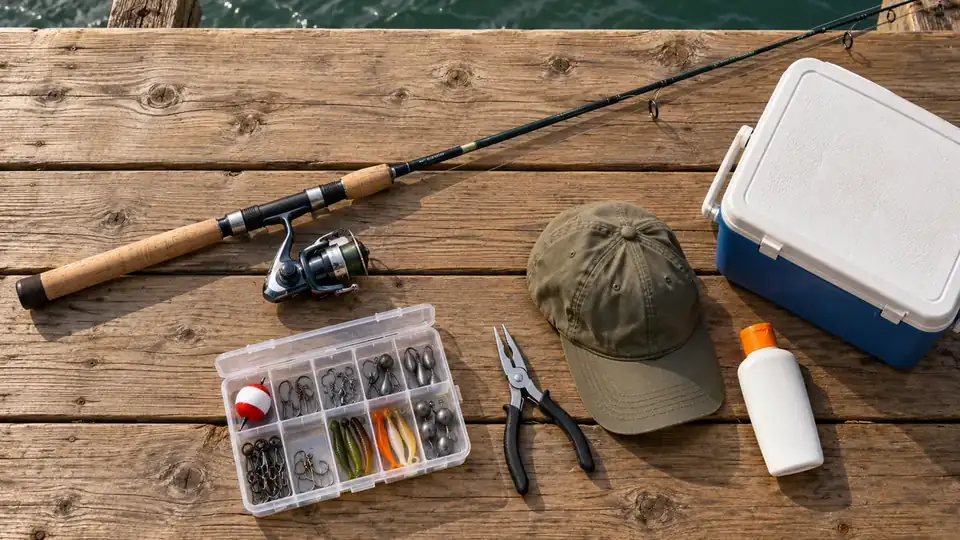
One compatible rod, reel and line, plus a few suitable hooks, swivels and sinkers, are enough to start learning. There is no universal casting weight or line strength for every beach. Match equipment to its rated limits, bottom type and realistic target, with help from a knowledgeable tackle shop if needed.
| Item | Purpose |
|---|---|
| Rod, reel and line | One setup you can assemble and control |
| Spare hooks, swivels and sinkers | A few compatible replacements |
| Pliers and line cutters | Manage tackle while keeping fingers away from points |
| Suitable bait cooler | Keep bait in appropriate condition |
| Water, cap and stable footwear | Comfort and footing, alongside location-appropriate safety equipment |
| Charged phone and rubbish bag | Communication and leaving no hooks or line behind |
4. Learn and check one rig
On relatively clear sand, one possible trial setup uses a running sinker, swivel, leader and hook. It is not a universal choice. Rocks, weed and repeated snagging may call for a different setup or a simpler place to learn.
- Run the line through the guides and check that it is not wrapped around the tip.
- Use a knot suited to the line and connection, following its tying method.
- Check it with gradual tension away from faces and other people, protecting yourself from line and hook points.
- Set the drag for the tackle rather than locking it as tightly as possible.
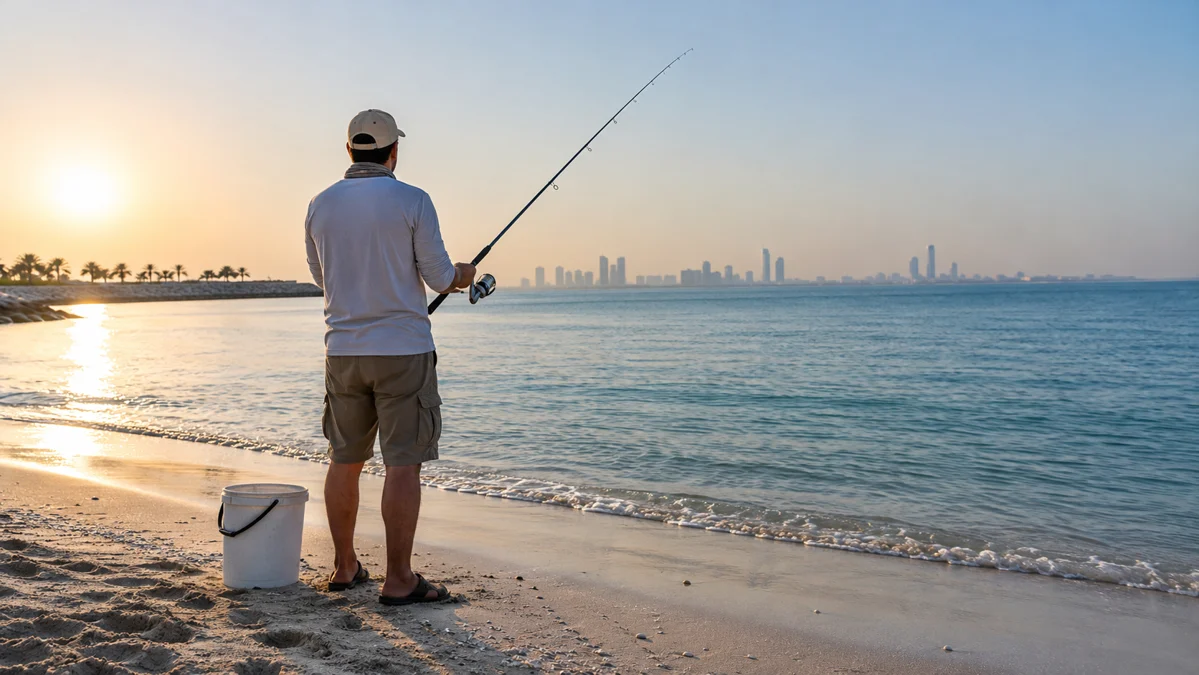
Read the rigs guide. A lifestyle photograph cannot teach a precise knot path on its own; practise on land and verify the connection before casting.
5. Present bait you can manage
Choose bait appropriate to the likely target and keep it in good condition. A suitable piece of shrimp may be an option, depending on the target. Bigger is not automatically better: a bulky piece may twist, conceal the working hook point or be difficult for fish to take.
Keep most bait protected in the cooler and take out only what you need. Start with one clear presentation rather than rapidly cycling through many baits. Check restrictions before collecting or using organisms you cannot identify.
6. Make a controlled first cast
Check behind and beside you so nobody enters the path of the sinker and hook. Learn a simple cast, practising with suitable weight before adding a hook if you are new to the movement. Stop if the line is tangled or you feel abnormal resistance.
After the sinker settles, gently retrieve slack without dragging the whole rig back. Hold the rod comfortably or use a stable holder. The best rod angle depends on wind and waves; it is not always upright.
7. Change one thing at a time
| Observation | First checks |
|---|---|
| Bait returns untouched | Position, casting range and presentation |
| Bait disappears without a clear bite | Bait size, attachment and hook size; small bait thieves are possible |
| Line drifts continuously | Angle, water movement and a suitable sinker within rod limits, or move |
| Repeated snags | Bottom type and rig choice; avoid forceful pulling near people |
| Repeated tangles | Wrapped line, leader length, bait size and casting movement |
8. If you catch a fish
Keep clear of the hook and do not grasp unfamiliar spines or teeth. A phone image alone may not establish species or permitted retention size. Follow current local handling and release guidance, and learn safe unhooking from an experienced person before handling an unfamiliar fish.
If keeping a legal catch, use suitable cooling. Do not leave it on hot sand for a photograph.
9. A printable departure checklist
Print this page or save it as a PDF using your browser. Ticks stay only in this page and reset on reload; no checklist data is transmitted.
10. Take three notes home
Write down time, bait and the casting range that produced activity or none. Add what line movement you saw and what you changed. Begin the next visit with that observation rather than starting again from zero.
Next, explore the sobaity or nuwaibi guide for your target. Note that the nuwaibi guide also covers boat methods. Learn one method at a time.