


Baits used for fishing in the Gulf: shrimp, crab and squid
In the Arabian Gulf, fishing has long been tied to natural bait, and today most anglers in Kuwait, Bahrain, Qatar, the UAE and Saudi Arabia still begin their trip at the market or the sea to get fresh bait before they head out. Local fish such as sobaity, nuwaibi, shaari, hamour and grunter change their appetite with the season, so baits change too. This article explains the baits most used in the Gulf and when each is used, with the caution that local names differ from country to country and that the advice here is general and needs field testing.
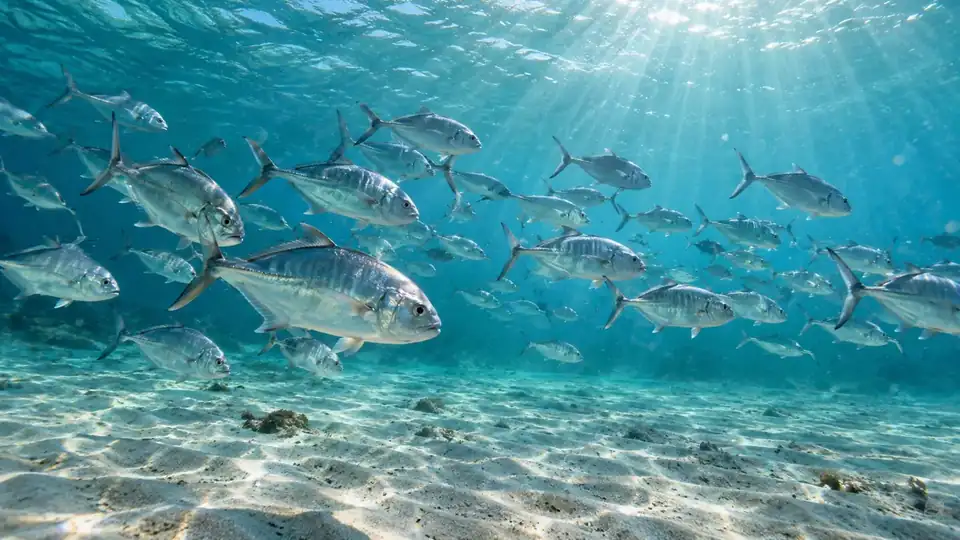
The most common natural baits
Shrimp
Almost the first-choice bait for bottom fish in the Gulf, eaten eagerly by sobaity, nuwaibi, shaari, grunter, hamra and more. Anglers prefer fresh, live shrimp or shrimp bought the same day. It is sometimes peeled partly to release scent, and hooked through the tail or body depending on size. Small shrimp suits small fish, while big ones are split in half for larger fish.
Small crab
Used by anglers after sobaity and hamour near rocks and moorings. It is cracked slightly to release scent and tied on with fine thread or hooked on a strong hook. Small fish find this bait hard to steal, so anglers put up with the effort of tying it.
Squid and cuttlefish
A tough, firm bait suited to hamour, grunter, kingfish and many bottom fish. It is cut into strips or rings, and sometimes used whole for large fish. It stays on the hook longer than sardine in the heat.
Sardine and small fish
Fresh or iced sardine is among the strongest baits for predators such as kingfish, grunter and hamour, as are strips of fresh fish. A common habit is to catch small fish at the harbour or shore first and use them live or as strips for bigger fish. Keep sardine cold; it spoils quickly in Gulf heat.
Shellfish (by area)
In some parts of the Gulf, anglers use small shells and mussels as bait for fish that eat crustaceans, but watch the local rules on collecting shellfish and on protected areas, since some countries ban collecting from reefs or certain zones.
Which bait in which season?
| Period | Common fish | Common baits |
|---|---|---|
| Winter (Dec – Mar) | Sobaity, shaari, nuwaibi, small hamour | Shrimp, crab, squid |
| Spring | Kingfish, grunter, sobaity | Sardine, shrimp, fish strips |
| Summer (Jun – Sep) | Rabbitfish, grunter, croaker | Small shrimp, dough and sea greens for rabbitfish, fish strips |
| Autumn (Oct – Nov) | Hamour, kingfish, sobaity | Squid, sardine, shrimp |
The table gives a general pattern only; timings vary by country, place and water temperature from year to year. See the "fish seasons" calendar in the tool for the season of each fish in your area.
Preparing and rigging the bait
- Pass the hook through the bait so the point stays slightly exposed and sets on the bite.
- A big bait attracts big fish but cuts bites from small ones, so match its size to the target.
- Live shrimp lasts longer in an aerated container or a bag moistened with seawater.
- Change the bait if nothing happens in 15 to 20 minutes.
- Do not forget pliers, a small knife and scissors for cutting bait safely.
Artificial baits in the Gulf
In recent years lure fishing has grown in the Gulf, especially in Kuwait, Qatar and the UAE: spoons, jigs, poppers and stickbaits for kingfish, grunter, hamour and barracuda. Their advantage is that they are clean, easy to carry and need no fresh bait. Try them at dawn and dusk. Read the casting and jigging guide for the method.
Match bait to location and tide
Natural bait usually works best on the ebb and flood, when moving water carries its scent to fish. See the best time to fish, choosing the right bait to pick bait by species, and for sobaity and nuwaibi see sobaity fishing and nuwaibi fishing.
Finally, follow the fishing rules in your country, respect permitted sizes and closed seasons, and never take more from the sea than you need.
Common mistakes with Gulf baits
- Leaving bait in the sun: shrimp and sardine spoil within minutes in summer heat. Use a small cooler and ice.
- A hook that is too big: sobaity and nuwaibi have medium mouths, and a large hook makes them leave the bait.
- Relying on a single bait: one day the fish prefer squid, another day shrimp. Take at least two kinds.
- Careless rigging: a dangling or loose bait is stolen by small fish and crabs in seconds.
Remember that good bait does not replace good timing; fish feed hard at particular times that depend on tide, moon and wind. Combine the right bait with the right time from the tool for the best result.